Here’s a scene that plays out across Karachi every single week. A family gets three quotes for a renovation. Two are close. One is 40% lower. They take the cheap one. Four months later, the work is falling apart and the contractor stopped answering calls after the final payment cleared.
This isn’t a rare horror story. It’s the default outcome when a contractor’s only credential is a WhatsApp number and a Facebook page full of stock photos.
So here’s the uncomfortable question this article is built around: if you can’t tell a licensed, accountable contractor from a middleman with a toolbox and a smile, how exactly are you supposed to hire one safely? That’s what we’re breaking down — not in vague “do your research” terms, but in the specific documents, numbers, and questions that separate a real contractor from a risk.
Why “He Seems Experienced” Is the Weakest Filter You Can Use
Most people hire on vibes. The contractor talks confidently, mentions a few projects, quotes a number that fits the budget, and that’s the interview process. Nobody asks for paperwork, because asking feels awkward — like you’re accusing someone of lying before they’ve done anything wrong.
Here’s the pattern-interrupt: asking for paperwork isn’t an accusation. It’s the single most normal thing a serious contractor expects. In Pakistan, construction contractors working above a certain threshold hold a Pakistan Engineering Council (PEC) licence — a registration that specifies exactly what category of work they’re authorized to perform and up to what project value. A contractor who bristles at being asked for that number is telling you something important before you’ve even signed anything.
Advanced Engineering & Construction (AEC), for context, holds PEC Licence No. 17347, Category C4/E, valid through 30 June 2027 — a category that covers construction projects up to Rs. 200 million. That’s not a marketing line. It’s a number you can ask for from any contractor, cross-check, and use to compare.
The Category Actually Matters More Than the Existence of a Licence
A lot of people miss this: having “a licence” isn’t the same as having the right licence for your job. PEC categories are scoped. A contractor registered for small residential fit-outs isn’t necessarily cleared for structural or civil work at scale. Ask which category applies to your specific project — grey structure, electrical, mechanical — not just whether they’re “licensed” in general.
How Do You Actually Verify a PEC Licence Isn’t Just a Number Someone Made Up
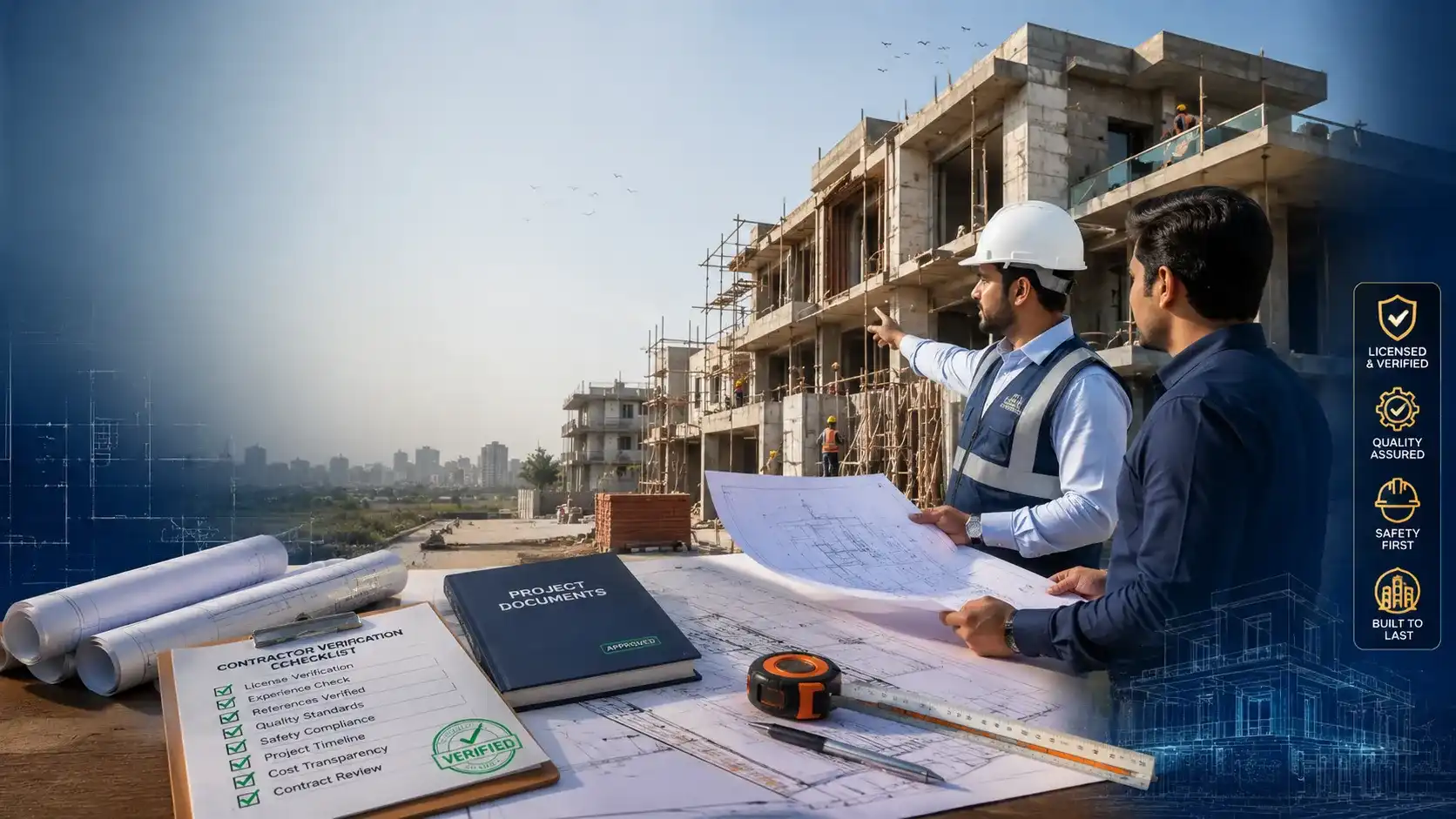
Short answer: ask for the licence number, the category, and the validity date, in writing, before you talk price. Then check that the category matches your project type, and that the company name on the licence is the exact name going on your contract.
This takes maybe ten minutes. Compare that to the months it takes to fix a botched foundation because the “contractor” was actually a labour broker with no registration at all. AEC’s registration spans twenty-six specialization codes across civil, electrical, and mechanical categories — precisely why one contractor can legally take on a multi-trade project instead of you juggling three unverified subcontractors and hoping they coordinate.
One thing worth saying plainly: a licence number alone doesn’t guarantee good workmanship. It guarantees accountability. It means there’s a registered entity you can hold responsible, and a paper trail if something goes wrong. In an industry with almost no consumer protection infrastructure, accountability is most of what you’re actually buying.
What Real Completed Projects Should Look Like on a Contractor’s Record
This is where most contractors go vague fast. Ask for a specific project — location, scope, contract value, and ideally a client name you could independently verify — and watch how quickly the answer gets fuzzy.
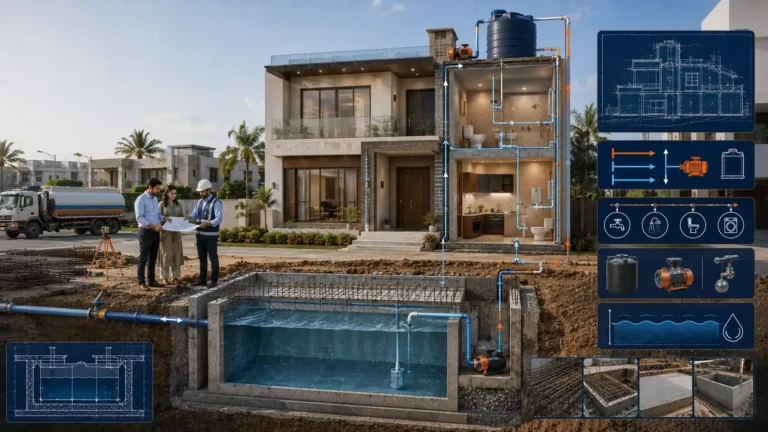
AEC’s private-client project record includes verified contract figures rather than round-number estimates. The company completed construction of a 273 square yard bungalow in Bahria Town Karachi, Precinct 16, for Mr. Mahessar, under a confirmed contract value of Rs. 40 million. It also delivered an underground water tank with 350,000 gallon capacity for Hansa Co-operative Housing Society in Karachi, valued at Rs. 42.78 million — a civil works project requiring precise structural and waterproofing execution given the tank’s scale. A third project, a swimming pool constructed in DHA Phase 6, Street 9, for Mr. Abdullah, carried a contract value of Rs. 12.23 million.
| Project | Location | Contract Value | Client |
|---|---|---|---|
| Residential bungalow construction (273 sq yd) | Bahria Town Karachi, Precinct 16, | Rs. 40 million | Mr. Mahessar |
| Underground water tank (350,000 gallon capacity) | Hansa Co-operative Housing Society, Karachi | Rs. 42.78 million | Hansa Co-operative Housing Society |
| Swimming pool construction | DHA Phase 6, Street 9, Karachi | Rs. 12.23 million | Mr. Abdullah |
Here’s why this matters more than it looks like it should: a water tank project and a swimming pool project both involve waterproofing and structural precision under very different load and pressure conditions than a standard bungalow. A contractor with only residential construction on record hasn’t necessarily handled either. Ask not just for a project list, but for the specific project type that maps to what you’re building.
What Documents Should Be on the Table Before Any Money Changes Hands
If the entire agreement lives in a WhatsApp chat and a handshake, you don’t have a contract. You have a hope.
Before signing anything, get these on paper:
- A written scope of work — the exact tasks and materials included, and explicitly what’s excluded
- An itemized cost breakdown — material cost, labour cost, and site prep cost as separate lines
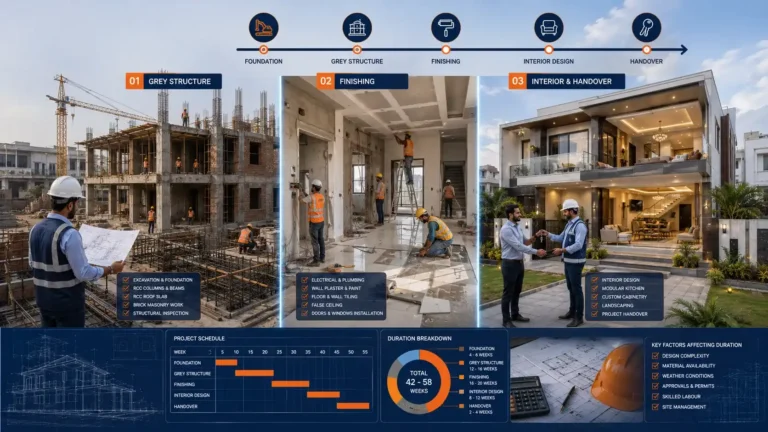
- A project timeline with milestones — stage-by-stage checkpoints, not just a completion date
- The PEC licence number and category, matched against your project scope
- Payment terms tied to milestones, not a large upfront lump sum
Here’s the part nobody tells you: a lump-sum quote with no breakdown is often hiding a weak line item. Ask for the split. A contractor with nothing to hide will give it to you without pushback.
Why Milestone-Based Payment Protects You More Than Any Contract Clause
A contract is only as good as your ability to enforce it, and most homeowners aren’t filing civil suits over a delayed renovation. What actually protects you day-to-day is structuring payment around completed milestones — grey structure done, waterproofing done, finishing done — rather than paying a large chunk upfront “for materials.” If a contractor insists on 70-80% before real work starts, that’s worth taking seriously, not talking yourself out of.
What Should You Actually Ask About Past Projects and Institutional Work
“Do you have experience?” is a useless question. Everyone says yes. The better question is specific: which project, which client, roughly when, and can I verify it.
Beyond private residential and civil work, AEC has completed projects for institutional clients including NED University of Engineering & Technology and Jinnah Sindh Medical University, and has delivered work connected to government departments including PWD and PDMA. A name you can independently look up is worth far more than “years of experience in the field,” which is the vaguest sentence in the entire Karachi contractor market.
For a residential job specifically, ask to visit a completed site like the Bahria Town bungalow or the DHA Phase 6 pool project. Photos get filtered and cropped. A real site shows you finish quality and how the crew actually works.
What Are the Actual Red Flags, Not the Movie-Villain Ones
Nobody shows up looking obviously shady. The red flags are quieter than that.
- No licence number offered, or a number that doesn’t match the claimed category
- A demand for full or majority payment before material delivery or real site work
- No fixed office address — just a mobile number and a Facebook page
- A quote sitting far below every other bid, with no explanation for the gap
- Visible reluctance to put scope or pricing in writing, or to name a single verifiable past project
That last one is the quietest and most common. Verbal enthusiasm costs nothing. A named client and a Rs. 40 million contract on record costs something to fabricate — which is exactly why real contractors can produce it and unregistered ones can’t.
Why Karachi’s Site Conditions Change Who You Should Even Be Considering
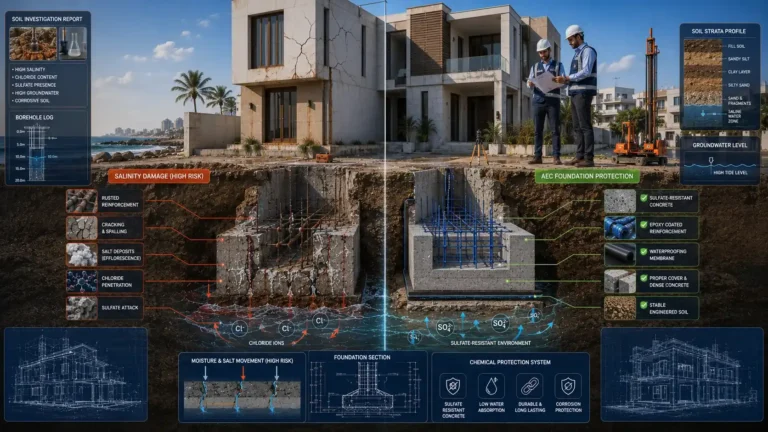
Coastal and reclaimed land areas of Karachi bring soil and drainage behaviour that differs from inland sites. A project like the 350,000 gallon underground water tank for Hansa Co-operative Housing Society depends entirely on getting that substrate and waterproofing right — get it wrong, and the failure shows up as leakage months later, not on day one.
Then there’s the Sindh Building Control Authority (SBCA), whose approval applies to most construction and major renovation work in the city. Some contractors manage this documentation themselves. Others expect the client to chase it separately, changing your total cost and timeline in ways that aren’t obvious from the initial quote. Ask directly which one you’re getting.
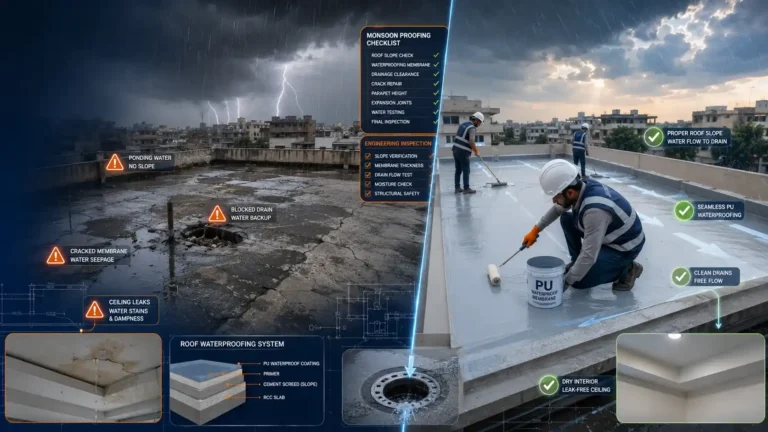
And monsoon season isn’t a footnote — it reshapes how waterproofing, electrical routing, and exterior finishing get sequenced. A contractor who treats the rains as an afterthought rather than something planned around from day one is telling you how much recent, real Karachi experience they actually have.
Does the Right Contractor Change Depending on Who You Are
Yes, and this is where a lot of advice gets too generic to be useful.
A homeowner mainly wants clarity — plain-language quotes, a manageable scope, and someone who doesn’t disappear mid-project. A private client building at scale, like a 273 square yard bungalow or a full swimming pool installation, needs a contractor who can quote and execute a confirmed contract value with precision, not a rough estimate. A housing society or institutional buyer, like Hansa Co-operative Housing Society commissioning a large-capacity water tank, needs technical capability matched to a specific engineering challenge, documented at scale.
The core checks — licence, written scope, named references — apply to everyone. What shifts is how much documentation each buyer type reasonably demands before signing.
The Bottom Line
As Karachi’s construction market gets more competitive, the gap between licensed, documented contractors and unregistered ones is going to widen, not shrink — because clients are getting less tolerant of disappearing contractors and undocumented promises. The ones who survive that shift are the ones who could already show their paperwork, and their project history, without blinking.
If you’re about to hire, don’t start with price. Start with the licence number and ask for a verifiable project reference. Everything else — the written scope, the itemized quote — follows naturally once those two checks are done.
Want a written, itemized quote and a site visit? Contact Advanced Engineering & Construction at +92-320-1176827 or Advancedengineeringc@gmail.com, or start from the homepage to see the full service range, including home renovation, civil contracting, and electrical work.
FAQs
What is a PEC licence, and why should I care as a homeowner?
It’s a Pakistan Engineering Council registration confirming a contractor’s authorized category and project value ceiling. For you, it means there’s a verifiable, accountable entity behind the work — not just a name on a WhatsApp chat.
How do I check if a licence number is real?
Ask for the number, category, and validity date in writing, then confirm the company name matches your contract exactly. A mismatch, or reluctance to provide it, is your answer.
Can I see proof of a contractor’s completed projects?
Ask for the location, scope, and contract value of a specific past project. AEC’s record includes a Rs. 40 million bungalow in Bahria Town, a Rs. 42.78 million water tank for Hansa Co-operative Housing Society, and a Rs. 12.23 million swimming pool in DHA Phase 6 — each tied to a named client.
Is a licensed contractor always more expensive?
Not necessarily. Licensed contractors quote from a documented scope, which usually means fewer surprise costs later, not a higher number upfront. The real cost difference tends to show up in disputes avoided, not the initial quote.
Can one contractor really handle civil, electrical, and mechanical work together?
Only if they’re registered across all three categories. AEC’s registration covers all three, spanning twenty-six specialization codes, which is why one point of contact can manage a multi-trade project instead of you coordinating separate crews.
What Karachi-specific questions should I ask that generic advice skips?
Ask about SBCA approval handling, foundation and waterproofing approach for your specific site conditions, and how they sequence work around monsoon season. Vague answers to any of these usually mean limited recent local experience.
What happens if a licensed contractor’s work still has defects?
A written scope of work should include a defect liability or snagging period, typically 30-90 days post-handover, during which the contractor fixes issues at no extra cost. Ask for this in writing before the final payment.
Should larger civil projects, like water tanks or pools, be treated differently from residential renovation?
Yes. Projects like a 350,000 gallon underground water tank or a full swimming pool installation involve structural and waterproofing precision under different load conditions than standard residential work. Confirm the contractor has completed a comparable project type, not just residential renovations.