False Ceiling Services in Karachi
False ceiling installation in Karachi using gypsum board, POP, and metal grid systems, executed under PEC Licence No. 17347. Pricing varies by material, ceiling height, and design detailing.
Advanced Engineering & Construction installs false ceilings across Karachi for residential, commercial, and institutional projects, working with gypsum board systems, POP (Plaster of Paris) finishes, and metal grid tile ceilings. The company holds PEC Licence No. 17347, Category C4/E, and has completed ceiling works as part of fit-out and renovation projects for institutional clients including NED University of Engineering & Technology and SZABIST (ZABTECH). Every false ceiling installation is executed under the Construction and Operation of Engineering Works Bye-laws 1987.
AEC handles the complete false ceiling scope — steel frame fabrication, board fixing, jointing, sanding, and finish coat — along with lighting cutouts, recessed lighting integration, ventilation grille openings, and cornice or cove detailing where specified. Projects run across Karachi including DHA, Clifton PECHS, Gulshan-e-Iqbal, Scheme 33 and Gulistan-e-Johar. False ceiling installation is part of AEC’s interior finishing scope — view all interior finishing and construction services available for homes, offices, and institutional projects in Karachi.
Contact Advanced Engineering & Construction — False Ceiling Services in Karachi
Get a False Ceiling Quote — Free Site Measurement
AEC installs gypsum board and POP false ceilings in Karachi for homes, offices, and commercial spaces — pricing based on material, ceiling height, and lighting cutout specifications.
False Ceiling Price in Karachi
False ceiling installation in Karachi costs between Rs. 180 and Rs. 380 per square foot depending on material choice, ceiling height, and design complexity. The table below gives a working reference by system type.
| False Ceiling Type | Price Range (Per Sq Ft) | Best For |
|---|---|---|
| POP (Plaster of Paris) | Rs. 180 – Rs. 300 | Ornate residential designs, curved and moulded finishes |
| Gypsum Board (Flat) | Rs. 250 – Rs. 350 | Modern residential and commercial interiors |
| Gypsum Board (Cove + Drop) | Rs. 280 – Rs. 380 | Living rooms, lobbies, multi-level designs |
| Metal Grid Tile Ceiling | Quoted per project | Offices, labs, institutional buildings |
These ranges reflect Karachi market conditions in 2025. Every project quote is site-specific. AEC provides a written scope and rate breakdown — not a verbal estimate — before work begins.
Four variables determine the final cost
Ceiling height
Taller rooms require longer suspension rods and more frame material.
Lighting cutouts
Each recessed downlight or LED strip recess adds cutting and finishing labour.
Design complexity
Flat fields cost less than stepped borders, coves, domes, or curved panels.
Slab condition above
Uneven or damp slabs require additional preparation before the frame can be set.
False Ceiling Installation in Karachi
AEC follows a fixed installation sequence on every false ceiling project, regardless of project scale or material type.
Ceiling height is measured at multiple points across the room to identify slab undulation. The net finished height is agreed with the client before any work begins.
The perimeter line is marked on the wall at the agreed finished ceiling height. Lighting point positions and ventilation openings are marked on the slab above before the frame goes up.
Threaded rods are drilled and fixed into the structural slab at calculated centres based on the board weight and frame span. Rod centres are set to the manufacturer’s specification — not estimated on site.
Main runners are hung from the suspension rods and levelled using a laser level. Cross-tees are clipped in at right angles to complete the grid. All levelling is checked before boarding begins.
Gypsum boards are screwed to the frame at the specified fixing centres. For POP systems, the plaster coat is applied over the mesh or board base in the sequence required for a flat, joint-free finish.
Board joints are filled, taped, and sanded flush. The surface is brought to a primer-ready finish. Lighting cutouts and grille openings are cut at this stage.
The most common failure point in false ceiling installations across Karachi is not the board or plaster material but the suspension work — rods set at inconsistent centres, runners not levelled correctly, or cross-tees not clicked through flush. These errors produce a ceiling that reads as uneven under raking light.
AEC uses a laser level for all layout and levelling work on every project.
Commercial & institutional experience
For commercial and institutional projects, AEC has installed false ceilings as part of coordinated interior fit-out scopes at SZABIST (ZABTECH) NED University of Engineering & Technology
On these projects, the ceiling scope included marking and cutting for recessed air diffusers and return air grilles alongside lighting cutouts — with full coordination across electrical and HVAC layouts.
Get a False Ceiling Quote — Free Site Measurement
AEC installs gypsum board and POP false ceilings in Karachi for homes, offices, and commercial spaces — pricing based on material, ceiling height, and lighting cutout specifications.
False Ceiling Designs in Karachi
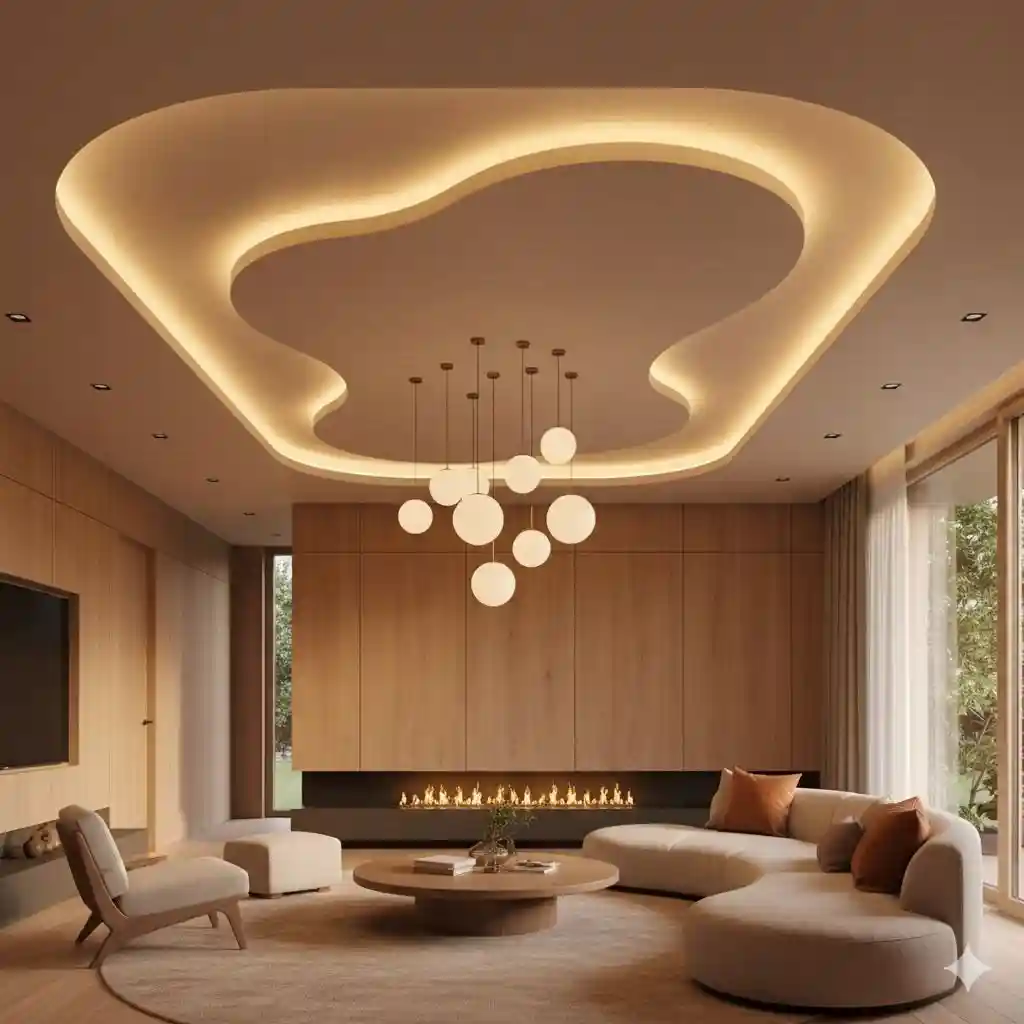
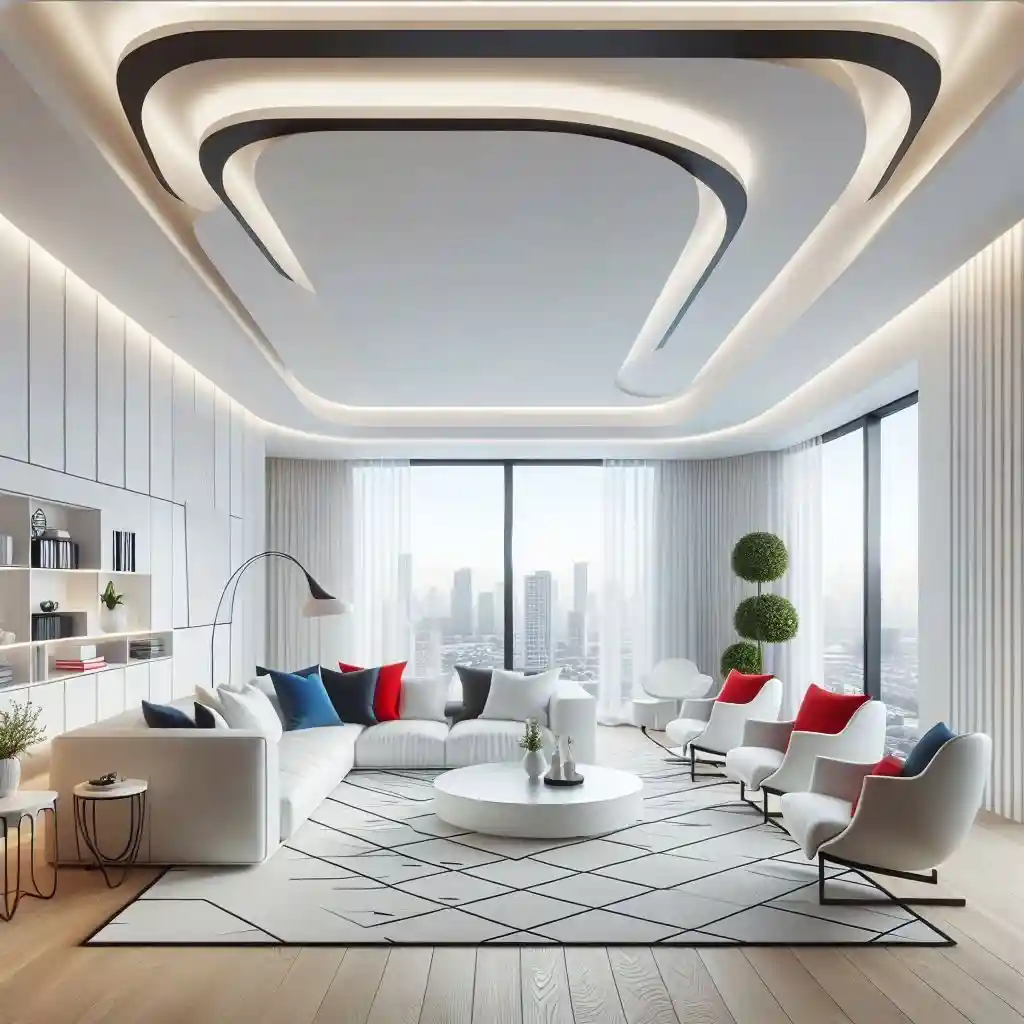
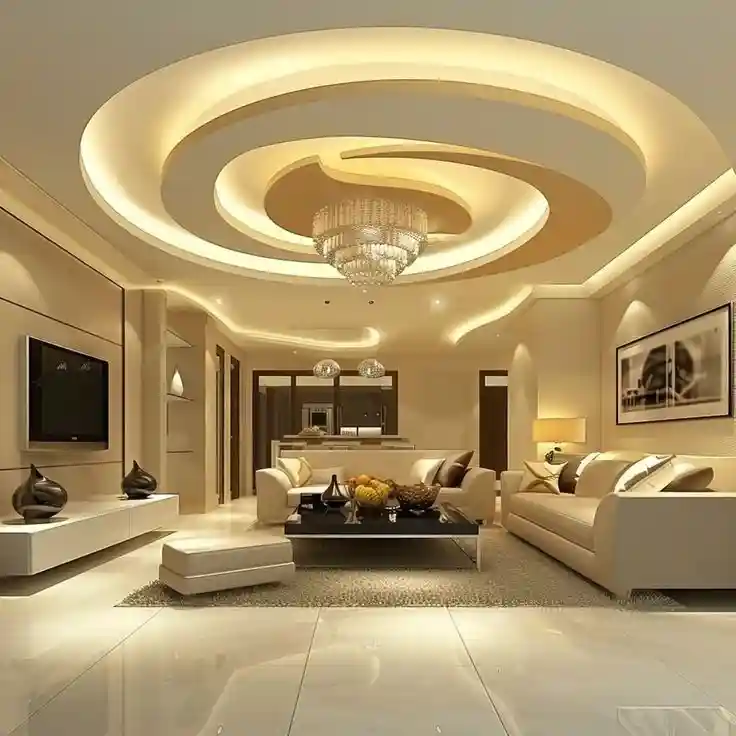

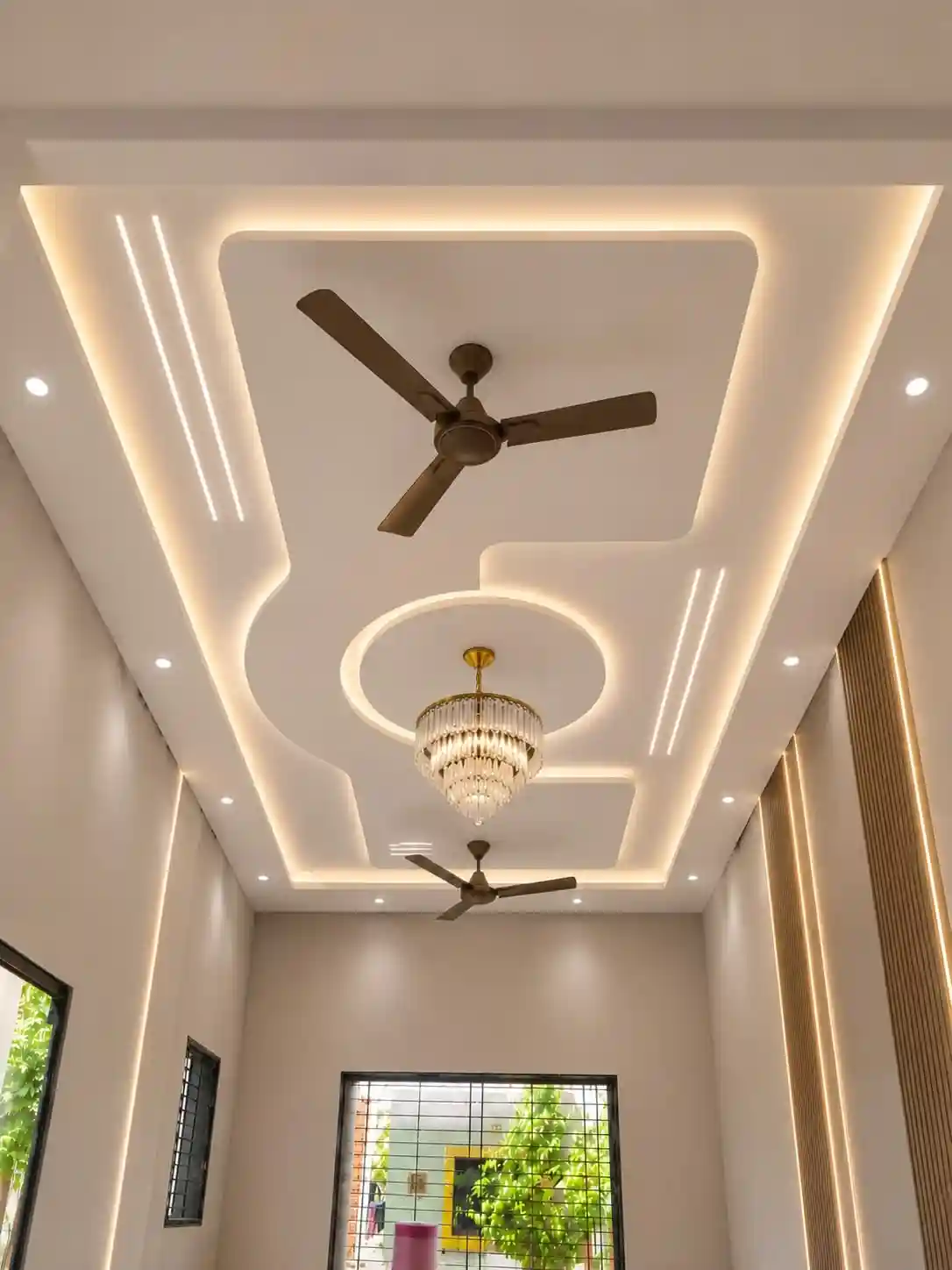
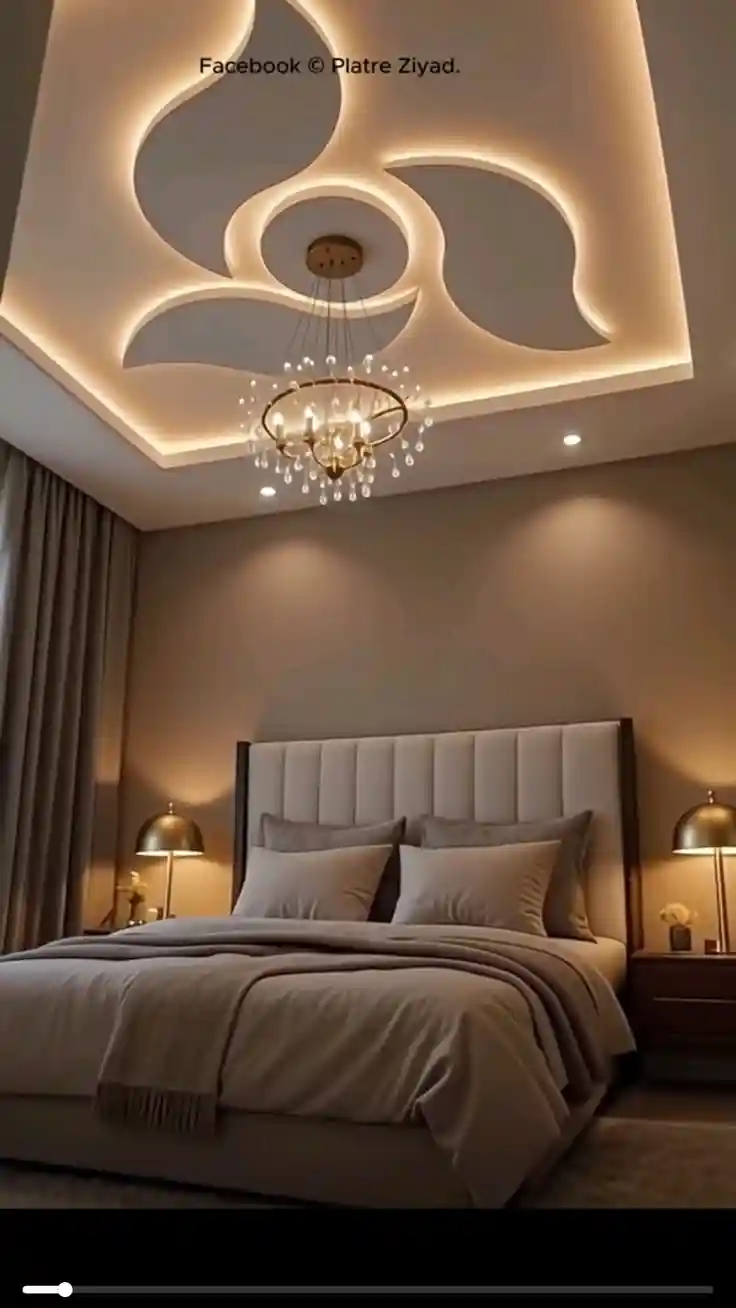
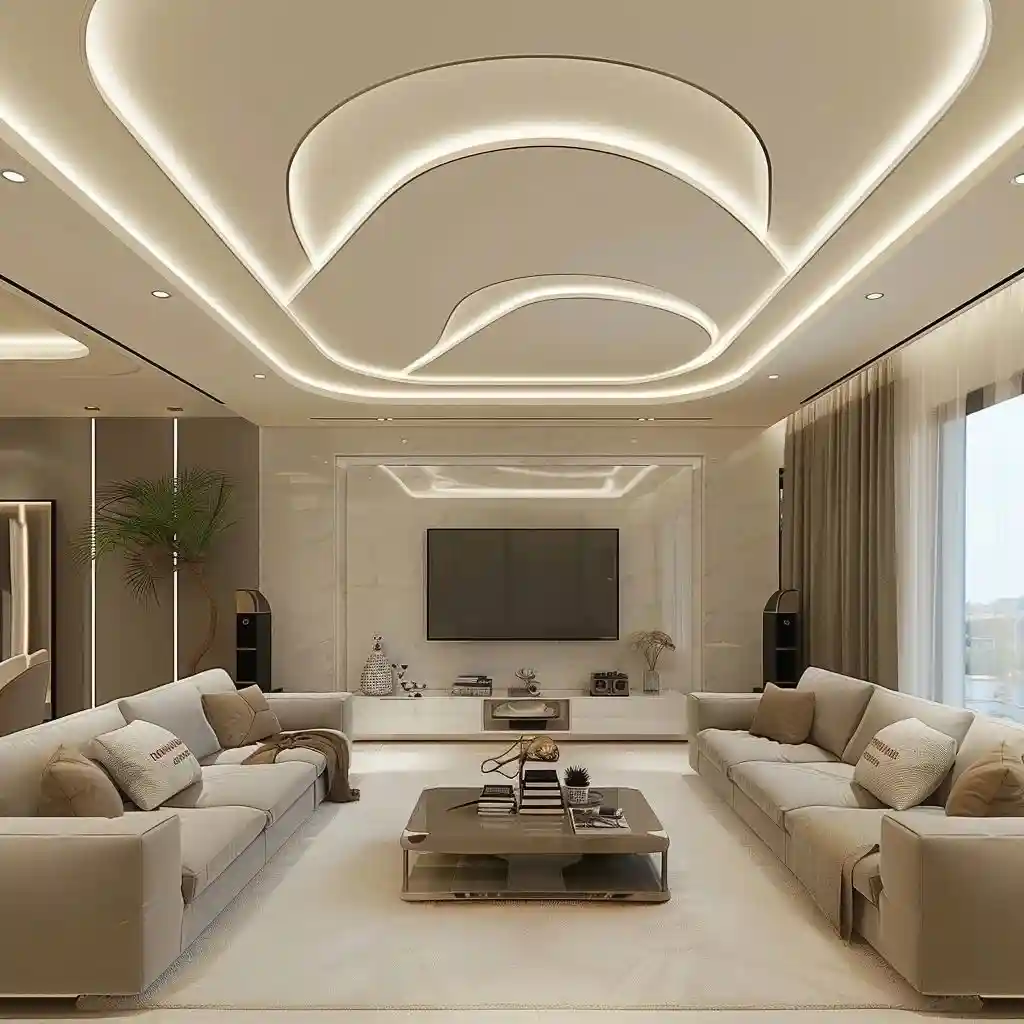
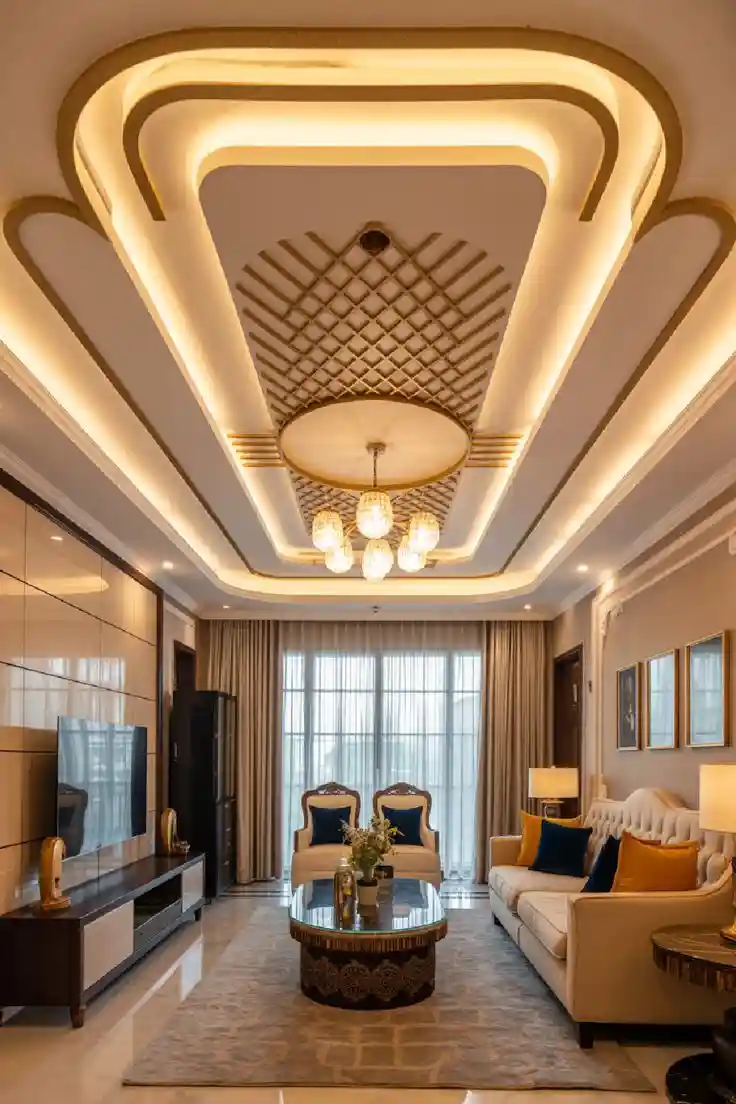
POP (Plaster of Paris) Ceiling Designs
POP ceilings remain the preferred choice for ornate residential designs across Karachi because the material can be trowelled, moulded, and shaped into forms that gypsum board cannot replicate without expensive cutting equipment. A well-executed POP design with a curved dome and ornate cornice costs more than a flat gypsum board installation but produces a finish that reads as architecturally integrated rather than visibly suspended.
POP ceiling design types AEC installs in Karachi:
| Design Type | Description | Typical Application |
|---|---|---|
| Flat POP with Painted Finish | Single-level smooth surface, no border detailing | Bedrooms, kitchens, utility spaces |
| Stepped Perimeter with Cove Lighting | Flat field with a recessed LED cove at the border | Living rooms, master bedrooms |
| Full Dome Ceiling | Curved dome in the central field, flat surround | Dining rooms, entrance lobbies |
| POP Cornice Moulding | Ornate moulded border at the wall-ceiling junction | Drawing rooms, formal reception areas |
| Combination Design | Flat central field framed by POP border with crown detail | Large living and dining areas |
AEC provides a design layout drawing before work begins on all POP projects to confirm proportions and detailing against the room dimensions and ceiling height.
For POP ceilings in Karachi’s coastal climate, moisture management is a critical execution detail. Moisture ingress from roof slab leaks above — common in older buildings in PECHS, Nazimabad, and parts of Gulshan-e-Iqbal — causes POP to soften, crack, and separate over time. AEC specifies a waterproof primer on the structural slab surface before installing any POP ceiling in buildings where roof waterproofing is not confirmed.
Gypsum vs POP False Ceiling — Which Is Right for Your Project?
| Factor | Gypsum Board | POP (Plaster of Paris) |
|---|---|---|
| Price Range | Rs. 220 – Rs. 380 per sq ft | Rs. 180 – Rs. 300 per sq ft |
| Installation Speed | Faster — frame and board | Slower — multi-coat plaster sequence |
| Design Flexibility | Limited to flat, stepped, cove | Curves, domes, mouldings, cornices |
| Moisture Resistance | Better — board is more stable | Lower — prone to softening if slab leaks |
| Best Suited For | Modern, commercial, institutional | Ornate residential, formal rooms |
| Future Modification | Easy — boards can be cut and patched | Harder — plaster requires re-application |
| Weight on Slab | Lighter | Heavier (thick plaster coat) |
For most residential drawing rooms and formal spaces in Karachi, a combination approach works best — gypsum board for the flat field and POP for the cornice and cove detailing. AEC executes both as a coordinated single scope.
Why Choose AEC for False Ceiling Work in Karachi
| AEC Credential | Detail |
|---|---|
| PEC Licence | No. 17347, Category C4/E |
| Project Capacity | Up to Rs. 200 million construction cost |
| Specialization Codes | 26 codes — civil, electrical, and mechanical |
| Electrical Scope | EE01 covers low-voltage lighting circuit works |
| Civil Finishing Scope | CE08 and CE09 cover interior finishing works |
| Established | June 2022, Karachi |
Confirmed government and institutional clients:
- Pakistan Works & Development (PWD)
- Pakistan Disaster Management Authority (PDMA)
- Sindh Industrial & Trading Estate (SITE)
- NED University of Engineering & Technology
- Jinnah Sindh Medical University
- SZABIST (ZABTECH)
- Sindh Madrassatul Islam University
- Sports & Youth Affairs Development
- Education & Works Department
Most residential ceiling contractors in Karachi manage only the ceiling scope. AEC holds PEC coverage for electrical works under EE01, meaning lighting circuit wiring, LED strip installation, and downlight point wiring are managed by AEC as part of the ceiling contract — not handed off to a separate electrician with no coordination accountability.
Contact Advanced Engineering & Construction — False Ceiling Services in Karachi
Get a False Ceiling Quote — Free Site Measurement
AEC installs gypsum board and POP false ceilings in Karachi for homes, offices, and commercial spaces — pricing based on material, ceiling height, and lighting cutout specifications.
Frequently Asked Questions
How much does a false ceiling cost in Karachi?
False ceiling installation in Karachi costs between Rs. 180 and Rs. 380 per square foot depending on the material — POP ceilings are at the lower end, gypsum board ceilings in the mid to upper range. The final figure shifts with ceiling height, the number of lighting cutouts, and whether the design includes recessed coves, stepped borders, or curved detailing. These figures reflect Karachi market rates in 2025 and are provided as planning context — every project is quoted individually after a site survey.
What is the difference between gypsum board and POP false ceilings?
Gypsum board ceilings use pre-manufactured boards fixed to a steel suspension frame and produce a flat, dimensionally consistent surface suited to modern and commercial interiors. POP ceilings are site-applied plaster over a mesh or board base and can be shaped into curves, domes, cornices, and moulded borders that board systems cannot replicate. Gypsum board is faster to install and more stable in humid conditions; POP is more versatile for ornate residential designs but depends heavily on the plasterer’s skill for a defect-free finish.
Is AEC a licensed contractor for false ceiling work in Karachi?
Advanced Engineering & Construction holds PEC Licence No. 17347, Category C4/E, covering civil works including interior finishing within projects up to Rs. 200 million in construction cost. The licence is issued under the Construction and Operation of Engineering Works Bye‑laws 1987. AEC’s twenty‑six PEC specialization codes cover civil, electrical, and mechanical works, meaning false ceiling projects that include integrated lighting and air conditioning fall within a single licensed scope.
How long does false ceiling installation take?
A standard flat gypsum board false ceiling for a residential apartment of 1,000 to 1,500 square feet takes between five and eight working days from frame installation to primer‑ready finish, assuming the electrical first‑fix is complete before boarding begins. Larger commercial projects or designs with cove lighting, POP border work, or multi‑level drops are scheduled based on the approved design and site access programme. AEC provides a project timeline in the written scope issued before work begins.
Do you install false ceilings for both homes and offices?
AEC installs false ceilings for residential projects — drawing rooms, bedrooms, dining areas, and full apartment fit‑outs — as well as for commercial offices, retail spaces, and institutional buildings. The company has completed ceiling works at NED University of Engineering & Technology and SZABIST (ZABTECH) as part of institutional interior fit‑out projects. For commercial and institutional scopes, AEC coordinates the ceiling installation with the electrical layout and, where applicable, the HVAC distribution design.
Can AEC handle the lighting wiring along with the false ceiling?
AEC holds PEC Licence No. 17347 covering both civil and electrical works, including EE01 for general low‑voltage electrical works. False ceiling projects that require integrated recessed lighting circuits, LED strip lighting in cove sections, or fan point wiring can be managed by AEC as a combined scope — ceiling frame and board work alongside the lighting first‑fix and point wiring. This removes the coordination gap that occurs when a separate electrician and ceiling contractor work independently on the same room.