Advanced Engineering & Construction repairs and strengthens ageing structures in Karachi through engineering audits, carbon-fiber wrapping, and high-pressure chemical grouting, offering an alternative to demolition for houses that still have sound bones. The company operates under PEC Licence No. 17347, Category C4/E, covering civil works up to Rs. 200 million in project value. A cracked wall or a slight tilt in the floor does not automatically mean a building has failed. In most older Karachi homes, it means one part of the structure needs attention, not the whole building.
Why PECHS and Federal B Area Owners Jump to Demolition
Many houses in PECHS and Federal B Area were built between the 1960s and the 1980s, decades before current Sindh Building Control Authority standards existed. Deep wall peeling, hairline cracks running diagonally from window corners, or a door frame that no longer sits square are common sights in these neighbourhoods. Owners usually read these signs one of two ways: sell the plot to a builder for redevelopment, or tear the house down and start over.
Both routes skip a step. A cracked wall can come from a leaking pipe, a shifted foundation, corroded reinforcement steel, or simple age-related settling — and each cause has a different fix. Treating every crack as proof of structural failure leads owners to demolish buildings that a targeted repair could have saved for a fraction of the rebuilding cost. An architect or structural engineer who inspects the house before any decision is made can usually tell within a single visit whether the damage is cosmetic, moderate, or genuinely load-bearing. For owners planning any renovation alongside a structural review, AEC’s architects in Karachi team can assess the building’s layout and condition together, so the structural and design decisions get made in the same conversation.
What a Structural Engineering Audit Actually Involves
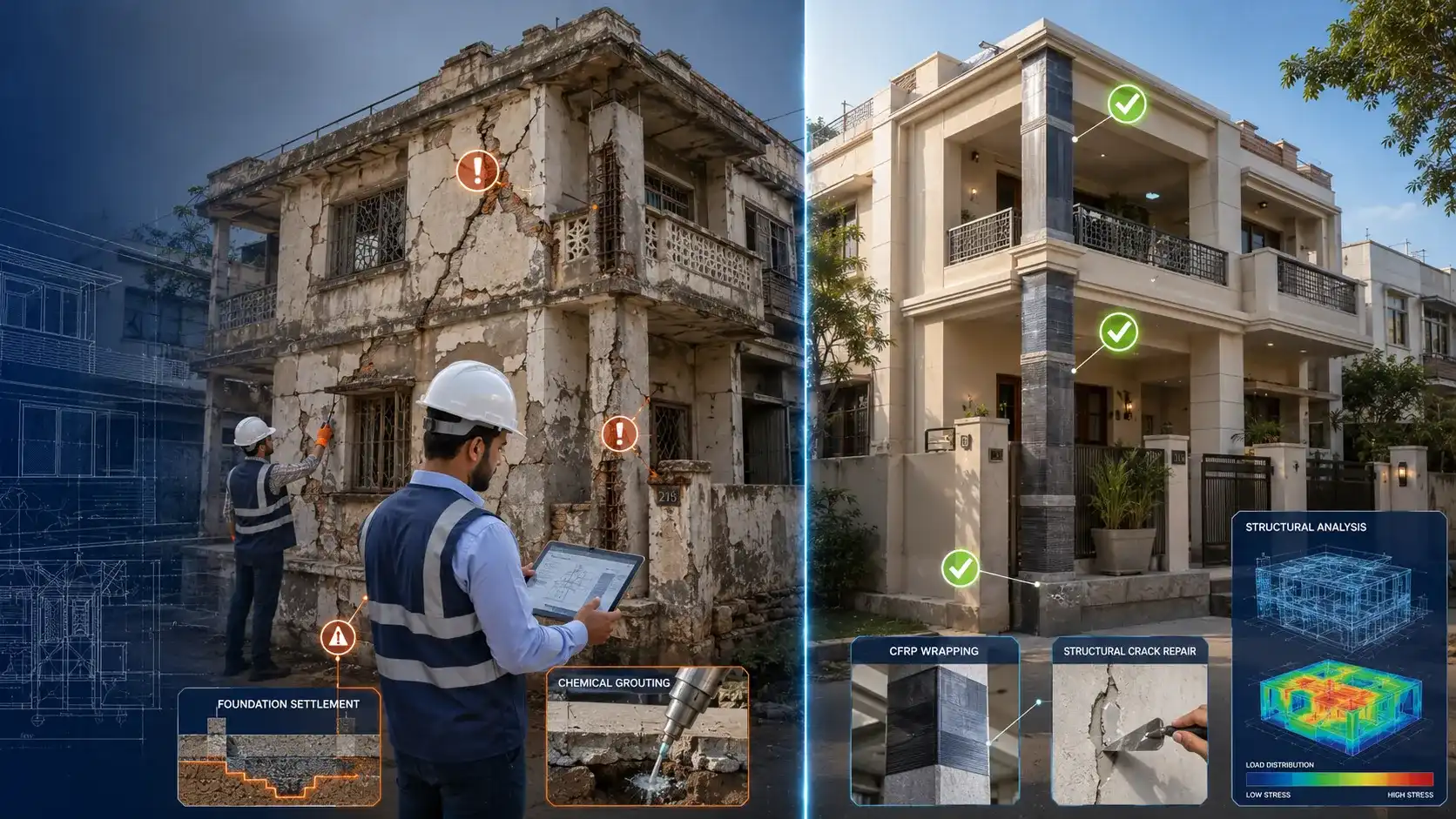
A structural audit starts with a visual survey and crack mapping across every affected wall, beam, and column, followed by a review of the original construction drawings where available. Engineers check for rebar corrosion using cover-meter testing, assess soil conditions around the foundation, and measure whether cracks are stable or actively widening. Karachi’s coastal humidity accelerates steel corrosion inside concrete members faster than in inland cities, which is why reinforcement condition gets checked even when the concrete surface looks intact. The audit report ends with a clear classification: cosmetic, repairable, or requiring full reconstruction — the finding that decides everything that follows.
Carbon-Fiber Wrapping: Restoring Strength Without Adding Weight
Carbon-fiber reinforced polymer wrapping bonds high-strength carbon fabric to an existing beam, column, or slab using structural epoxy resin, forming a composite that shares load with the original concrete. The wrap adds almost no weight to the structure, which matters in older buildings where the foundation was never designed to carry extra mass. This makes it well suited to columns weakened by corrosion, beams that have developed shear cracks, or structural members that need extra capacity after a change in building use. Application requires surface grinding to expose sound concrete, an epoxy primer coat, the carbon fabric layer, and a saturant resin that bonds everything into a single hardened shell — work that takes days per structural member, not the weeks a full demolition and rebuild would need.
High-Pressure Chemical Grouting: Fixing the Foundation From Below
Chemical grouting addresses the part of the building owners cannot see. Epoxy or polyurethane resin gets injected under pressure into foundation cracks and the voids beneath a slab, sealing gaps and binding loose soil particles into a denser, load-bearing mass. Where a foundation has settled unevenly, grout injected through small drilled points can also lift and stabilise the slab without the excavation a traditional underpinning job would require. The process suits Karachi’s reclaimed and coastal soil zones particularly well, since these areas see more foundation movement from moisture fluctuation than the city’s firmer inland ground.
Warning Signs and the Matching Repair
| Warning Sign | Likely Cause | Retrofitting Technique |
|---|---|---|
| Diagonal cracks from window or door corners | Foundation settlement or wall shrinkage | Chemical grout injection, crack sealing |
| Vertical cracks along a column | Corroded reinforcement or overloading | Carbon-fiber column wrapping |
| Sloping floor or misaligned doors | Uneven foundation settlement | High-pressure grouting, slab stabilisation |
| Spalling concrete with exposed rebar | Corrosion from moisture ingress | Rebar treatment plus carbon-fiber wrap |
| Hairline cracks confined to plaster only | Surface shrinkage, non-structural | Cosmetic repair, no retrofitting needed |
Retrofitting Versus Rebuilding: The Real Cost Comparison
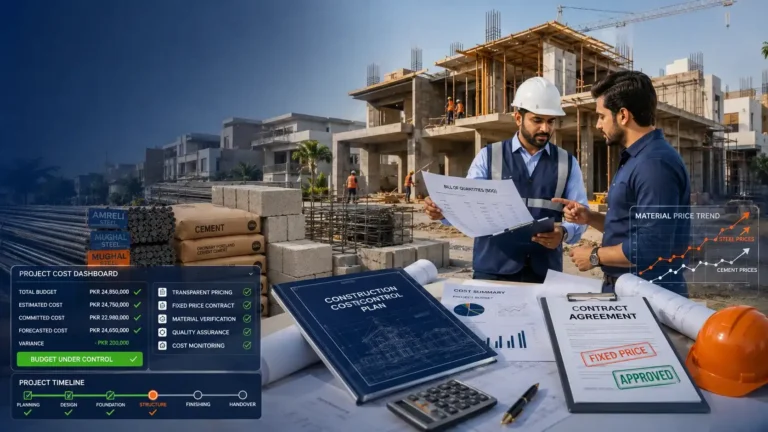
Retrofitting is priced per structural member and per audit finding, not as a flat rate across the whole building footprint, since the work targets specific damaged columns, beams, or foundation sections rather than every wall and slab in the house. Rebuilding, by contrast, is priced per square foot across the entire built-up area, then multiplied by finishing costs on top of the grey structure. As a general industry benchmark across Pakistan, structural retrofitting of a residential building typically runs at a fraction of full reconstruction cost, commonly cited in the twenty to forty percent range of what a comparable rebuild would cost, depending on how many members need treatment and how advanced the damage is. An audit gives the exact figure for a specific house; a demolition quote never accounts for what could have been saved.
Retrofitting also avoids costs a demolition and rebuild carries by default: NOC renewal with the Sindh Building Control Authority, temporary relocation for months rather than weeks, and the loss of any grandfathered zoning allowance tied to the existing structure.
Credentials and Trust: Why the Assessment Matters More Than the Method
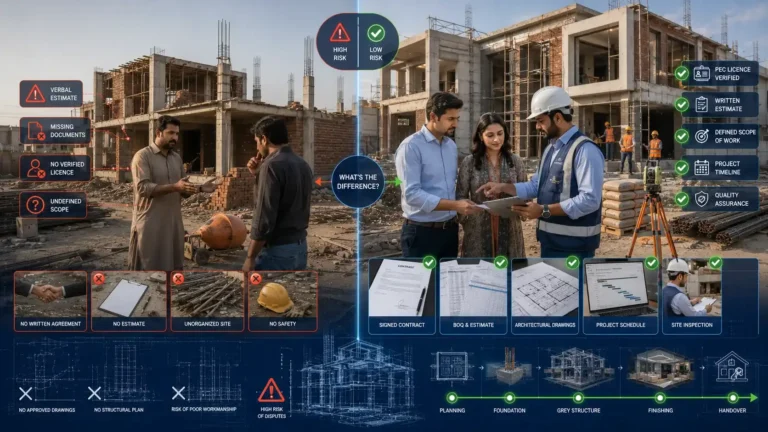
AEC holds PEC Licence No. 17347, Category C4/E, valid through June 2027, spanning 26 specialization codes across civil, electrical, and mechanical works. The company’s civil engineering registrations sit within this same licence structure, and its project history includes institutional clients such as NED University of Engineering & Technology, Pakistan Works & Development, and Pakistan Disaster Management Authority. A structural audit carries weight only when the engineer signing it operates under a verifiable licence — not a verbal opinion from a contractor pushing for a demolition contract.
Engr. Ahsan Razak established Advanced Engineering & Construction in June 2022 as a sole proprietorship, building the practice around the same civil, electrical, and mechanical disciplines the PEC licence now covers. The company’s project ceiling under Category C4/E sits at Rs. 200 million, sufficient scope for structural retrofitting work on individual residential and small commercial properties across Karachi.
Once the structural work is certified complete, most owners move directly into updating the interior finishes that the retrofitting exposed or disturbed during repair. AEC’s interior design services in Karachi team picks up at that point, coordinating wall finishes, ceiling repair, and layout changes around the newly reinforced structure.
Getting an Audit Before You Decide
A structural engineering audit costs a fraction of even the cheapest demolition quote and takes a few days to complete. Call Advanced Engineering & Construction at +92-320-1176827 or write to Advancedengineeringc@gmail.com to schedule a site visit at Office 34, Decent Towers, Block 15, Gulistan-e-Johar. Bring the original construction drawings if they exist; if not, the audit team maps the structure from scratch during the visit.
Frequently Asked Questions
Is AEC’s structural assessment work covered under a valid PEC licence?
Yes. Advanced Engineering & Construction operates under PEC Licence No. 17347, Category C4/E, valid through June 2027, covering civil works up to Rs. 200 million in project value. The licence spans 26 specialization codes across civil, electrical, and mechanical disciplines.
How much does structural retrofitting cost compared to rebuilding in Karachi?
Retrofitting is generally priced at twenty to forty percent of full reconstruction cost, since it addresses only the damaged structural members rather than the entire building footprint. Exact pricing depends on how many columns, beams, or foundation sections require treatment, which is why every project starts with a paid or complimentary audit rather than a flat quote.
Can carbon-fiber wrapping really replace rebuilding a column?
In most cases where corrosion or minor overloading is the cause, yes. Carbon-fiber wrapping restores load-bearing capacity by bonding a high-strength fabric to the existing concrete with structural epoxy, adding strength without adding weight to the foundation below it.
How long does chemical grouting take for a foundation repair?
A typical residential foundation grouting job takes a few days to a week, depending on how many injection points the audit identifies. This is considerably faster than the months a full foundation reconstruction would require, and it does not involve excavating around the house.
Do I need to vacate my house during structural retrofitting?
Usually not. Carbon-fiber wrapping and chemical grout injection are designed to cause minimal disruption to the occupied parts of a building, unlike demolition and rebuilding, which requires full relocation for the length of the project.
Does AEC work in PECHS and Federal B Area specifically?
Yes. AEC carries out structural audits and retrofitting work across Karachi’s older residential neighbourhoods, including PECHS, Federal B Area, Gulshan-e-Iqbal, and North Nazimabad, where ageing reinforced concrete structures are common.