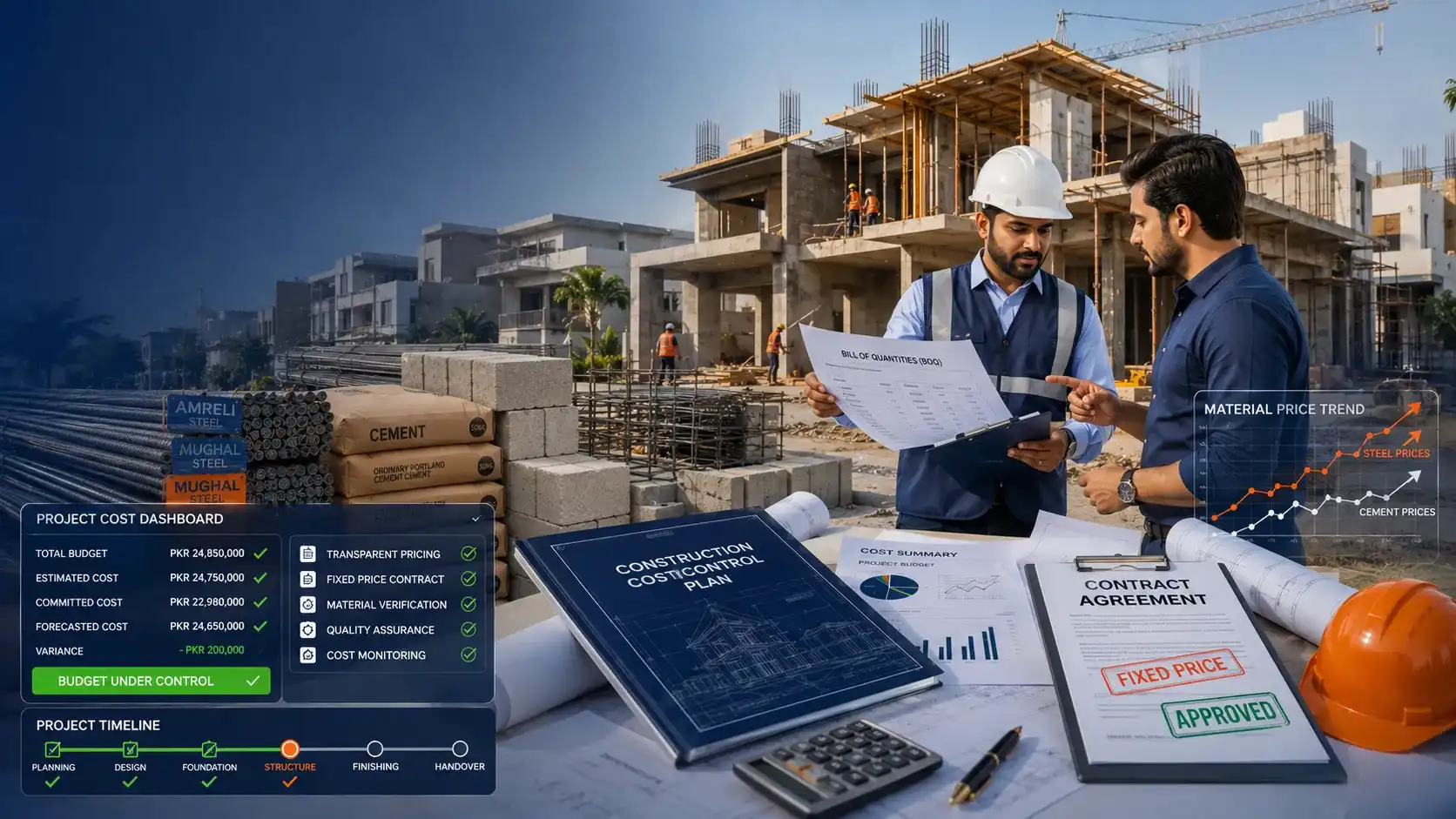
Advanced Engineering & Construction budgets Karachi construction and renovation projects against detailed Bill of Quantities tracking and fixed-cost turnkey contracts, so steel and cement price swings during the build do not become the client’s problem. The company operates under PEC Licence No. 17347, Category C4/E, covering civil works up to Rs. 200 million. Sudden jumps in the price of Amreli or Mughal steel, or a cement rate that shifts between the first site visit and the third floor slab, are the single most common reason Karachi contractors either stop work mid-project or show up asking for cash outside the original agreement.
Why Karachi Construction Budgets Break Mid-Project
Steel and cement are not stable commodities in Pakistan. Grade 60 reinforcement steel has traded between roughly Rs. 260 and Rs. 285 per kilogram through 2026, while a standard 50-kilogram cement bag has moved between about Rs. 1,350 and Rs. 1,550, and both figures shift by brand and by week. Amreli Steel and Mughal Steel, the two brands most Karachi projects specify, were both quoted near Rs. 258 to 260 per kilogram in late June 2026. Fuel price volatility tied to regional conflict has pushed transportation and kiln energy costs higher through 2026, adding pressure to both materials from the supply side rather than local demand alone.
A contractor working on a standard labour-plus-material contract, quoted before these shifts, has two choices when steel jumps mid-project: absorb the loss on a job with thin margins to begin with, or stop pouring concrete until the client agrees to pay more. Neither choice was written into the original agreement, which is exactly why so many Karachi homeowners hear “steel ka rate barh gaya hai” three months into a project that already has their savings in it.
What a Bill of Quantities Actually Locks In
A Bill of Quantities is a line-by-line document listing every material a project needs, by brand, grade, and quantity, priced before construction starts. For a grey structure, that means tonnage of Grade 60 steel by brand, the exact number of cement bags by manufacturer, cubic feet of sand and crush, brick count, and labour cost per trade — all fixed on paper before the first rupee changes hands. Once signed, the owner has a document to check site deliveries against. If the BOQ specifies Mughal Steel and a truck arrives with an unbranded local substitute, that is now a documented breach rather than an argument nobody can resolve.
Most cost disputes in Karachi construction happen because no such document exists. A verbal quote for “structure ka kaam” leaves both brand and quantity open to interpretation, and interpretation is where blame-shifting starts.
Turnkey Contracting: Who Actually Carries the Inflation Risk
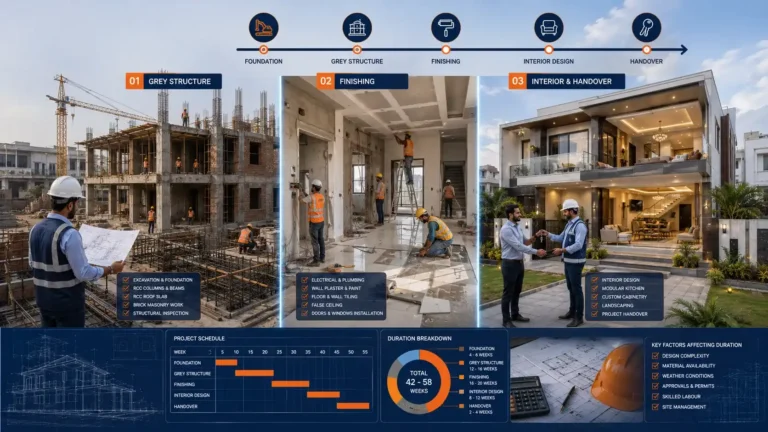
A turnkey contract fixes the total project cost against a defined scope before construction begins, and the contractor — not the client — absorbs any material price increase that happens during the build. AEC prices renovation and construction projects this way specifically because a typical Karachi house or renovation runs five to eight months from grey structure to handover, long enough for steel and cement rates to move more than once during that window.
This shifts the financial risk to the party better positioned to manage it. A licensed contractor working across multiple sites can hedge material purchases and negotiate bulk rates with steel and cement suppliers in a way an individual homeowner cannot. The trade-off is scope discipline: once the BOQ and turnkey price are signed, the specification stays fixed unless the client requests a genuine change, at which point the cost adjustment is documented against that specific change, not blamed on the market.
Standard Contract vs. Turnkey BOQ Contract
| Factor | Standard Labour + Material | Turnkey Fixed-BOQ Contract |
|---|---|---|
| Who absorbs steel/cement price rises | Client, mid-project | Contractor, for the contract duration |
| Material brand and grade | Often unspecified | Named and fixed in writing |
| Mid-project cost claims | Common, undocumented | Only for client-requested scope changes |
| Payment structure | Ad-hoc, tied to contractor requests | Staged against verified BOQ milestones |
| Site abandonment risk | Higher when margins compress | Lower, since cost is already fixed |
Common Mid-Project Blame Games — and How Tracking Stops Them
Three patterns repeat across Karachi renovation and construction complaints. A contractor quotes a low headline price, then claims the steel rate changed once the foundation is poured and money is already committed. A site receives unbranded steel or a cheaper cement bag than what was verbally promised, discovered only when a wall cracks two years later. Or a contractor simply stops showing up once a job stops being profitable at the original quote, leaving a half-built structure and no clear next contractor willing to take over someone else’s unfinished work.
An itemised BOQ closes the first two patterns by making brand and rate a written commitment the client can verify against delivery notes. A turnkey structure closes the third, since the contractor has already priced in the risk of the job running long and has no financial incentive to abandon a fixed-price agreement partway through.
Questions Every Karachi Homeowner Should Ask Before Signing
- Is the Bill of Quantities itemised by material brand, grade, and quantity, or is it a lump-sum estimate?
- Is the total project price fixed, or does the contract include an escalation clause tied to market rates?
- What specifically triggers a legitimate cost revision — only client-requested scope changes, or anything the contractor decides to cite?
- Can site deliveries be checked against the signed BOQ at any point during construction?
- What happens contractually if the contractor stops work before completion?
A contractor unwilling to put clear answers to these five questions in writing is telling a homeowner something important before the first brick is laid.
Credentials Behind the Numbers
AEC holds PEC Licence No. 17347, Category C4/E, valid through June 2027, with 26 specialization codes spanning civil, electrical, and mechanical works. Engr. Ahsan Razak founded the company in June 2022 as a sole proprietorship, and its project history includes institutional clients such as NED University of Engineering & Technology and Pakistan Works & Development. A licensed contractor with a Rs. 200 million project ceiling has more accountability riding on a signed BOQ than an unregistered contractor working off a verbal quote, which is part of why the licence number belongs in every contract conversation, not just on a company profile page.
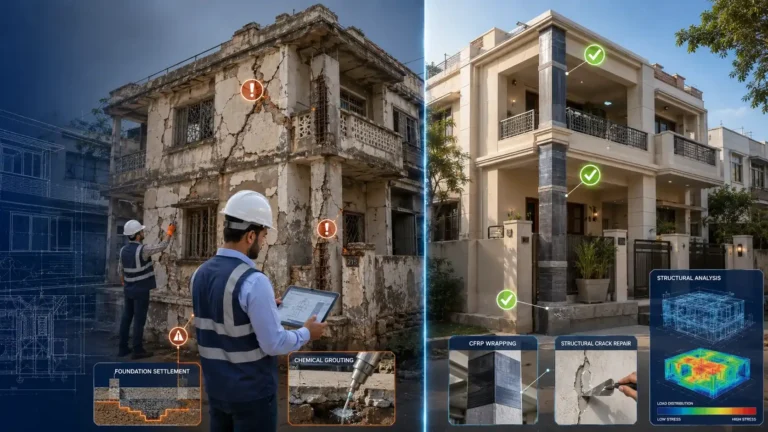
For a full house renovation specifically, AEC’s home renovation services in Karachi page details how this same BOQ and turnkey structure applies to renovation-scale projects, where material substitution disputes are just as common as they are on new builds.
Getting a Fixed-Cost Quote
Call +92-320-1176827 or write to Advancedengineeringc@gmail.com to request an itemised BOQ for your project before signing anything with any contractor. AEC’s office is at Office 34, Decent Towers, Block 15, Gulistan-e-Johar, Karachi, and a site visit can produce a preliminary quantity estimate within days.
Frequently Asked Questions
Is AEC’s turnkey pricing backed by a valid PEC licence?
Yes. Advanced Engineering & Construction operates under PEC Licence No. 17347, Category C4/E, valid through June 2027, covering civil works up to Rs. 200 million in project value.
What happens if steel prices rise after I sign a turnkey contract with AEC?
The signed price stays fixed for the contracted scope. AEC absorbs the cost difference on steel, cement, and other specified materials for the duration of the project, unless the client requests a change to the original scope.
Can I see the Bill of Quantities before I sign anything?
Yes. The BOQ is presented and reviewed with the client before any contract is signed, listing material brands, grades, and quantities line by line so nothing is agreed to on a verbal estimate.
How is a turnkey contract different from a normal contractor quote?
A normal quote is often a lump-sum estimate with no fixed material specification, leaving room for later cost claims. A turnkey contract fixes both the total price and the exact materials against a written BOQ before construction starts.
Does this apply to renovation projects or only new construction?
Both. Material substitution and mid-project cost claims are just as common on renovation work as on new builds, which is why AEC applies the same BOQ and turnkey structure to renovation contracts.